
TL;DR:
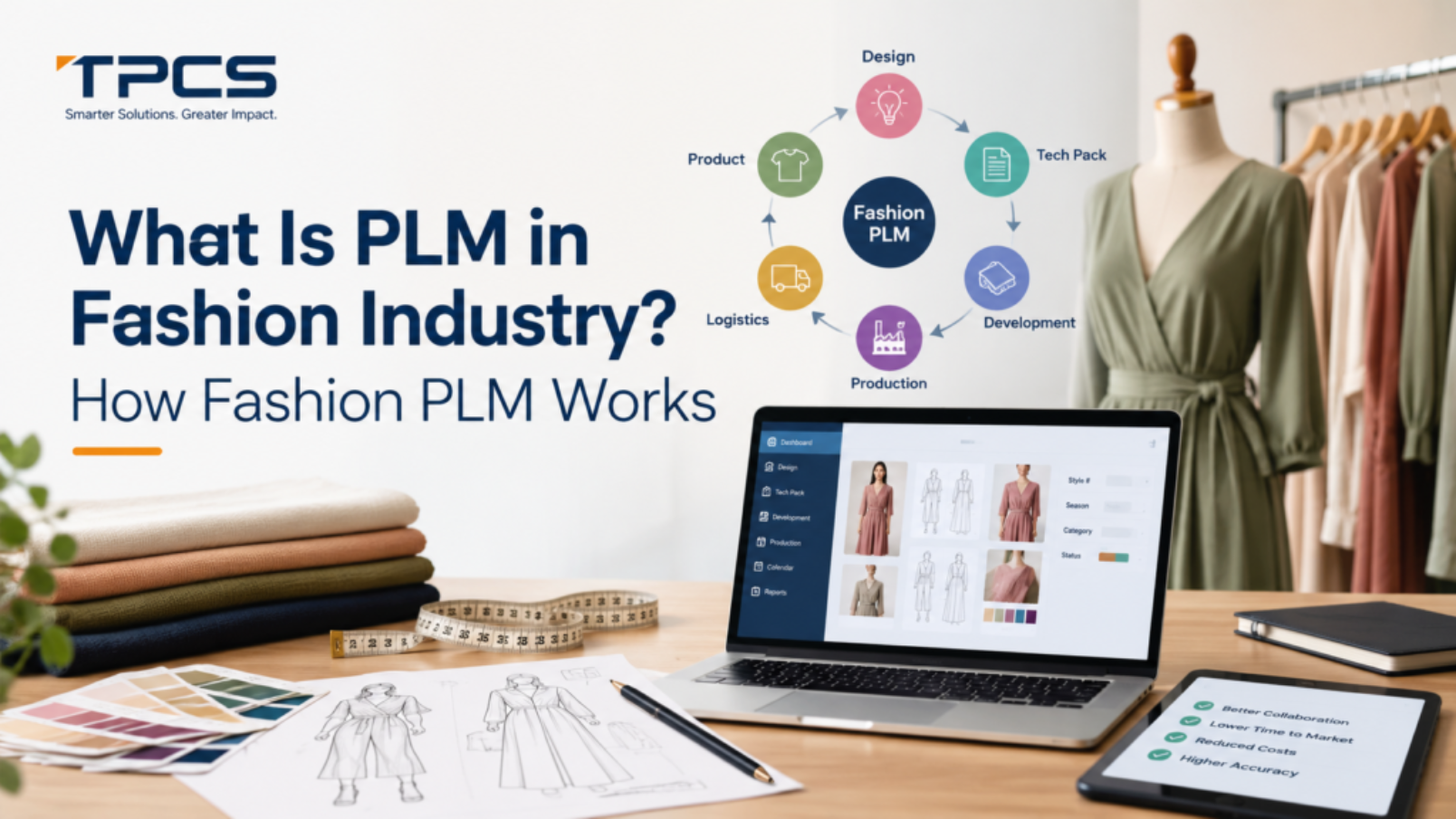
PLM in the fashion industry is the system that keeps a style’s techpack, BOM, colourways, sample comments and costing in one shared record, so design, merchandising, sampling and sourcing work from the same version. It runs a style through seven stages, from line planning to the hand-off to ERP for production.
At 9:40 pm, a merchandiser at a Bengaluru export house gets a mail from a UK buyer. The lining on style 4417 is changing from virgin polyester to recycled polyester. She replies “noted” and goes to sleep.
By 11 the next morning, four things have gone wrong. The techpack PDF on the shared drive still shows the old lining. The sampling room has already cut the fit sample with it. The costing sheet in Excel carries the old fabric price. And a draft purchase order for 6,000 metres of the wrong lining is sitting in someone’s outbox.
Nobody was careless. Four people simply worked from four copies of the truth. If that sounds like your Monday, you already understand what PLM in the fashion industry is meant to fix.
What is PLM in the fashion industry?
Definition: PLM (product lifecycle management) in the fashion industry is software, and a way of working, that holds every detail of a style in one live record, from the first sketch to the approved production sample. Design, merchandising, sampling, sourcing and costing teams update that single record instead of mailing files to each other.
In the style 4417 story, a PLM system would have let the merchandiser change the lining once. The techpack, the BOM, the cost sheet and the sampling team’s task list would all have picked up the change, and the old PO draft would have been flagged.
That is the whole idea. PLM does not design clothes for you. It stops good people from working on stale information.
Why fashion PLM is different from engineering PLM
PLM started in engineering. Aircraft and car makers used it to manage parts that stay in production for years and go through formal change control.
A T-shirt style might live for one season. In that season it can have six colourways, a size range from XS to 3XL, three rounds of fit comments and two price renegotiations. Engineering PLM was never built for that pace or that kind of variation.
So fashion PLM tools carry things you won’t find in an engineering tool:
- Colourway matrices, where one style carries many colour combinations, each with its own lab dip status.
- Size specs with grading rules and tolerances per point of measure.
- Sample rounds (proto, fit, size set, PP, TOP) with comments and photos for each round.
- Buyer-specific techpack formats, which matters a lot for Indian exporters who receive a different template from every brand they supply.
What a fashion PLM system holds: the style record
Think of the style record as a folder that never goes out of date. Here is what usually sits inside it and who tends to own each part in an Indian export or brand set-up.
| Part of the style record | What it contains | Usual owner |
| Techpack | Flat sketches, construction details, stitch types, artwork placement | Design or technical team |
| BOM (bill of materials) | Fabric, trims, labels, packing items, consumption per piece | Merchandising |
| Size specs and grading | Points of measure, tolerances, grade rules | Pattern master or technical team |
| Colourways | Colour codes, lab dip rounds, approval status | Design and merchandising |
| Sample history | Each sample round with comments, measurements, photos | Sampling room |
| Costing | Fabric and trim cost, CM, overheads, margin, buyer quote | Costing or merchandising |
| Material and vendor library | Approved mills, trim suppliers, last prices, lead times | Sourcing |
Visual suggestion: Diagram of one style record in the centre with the seven parts above connected to it, each labelled with its owner team.
If you want to see how the BOM part works in detail, read our guide on what BOM means in garment manufacturing.
How does fashion PLM work? A style’s journey in seven stages
Here is how a style typically moves through fashion PLM. Let’s follow style 4417 again, a women’s lined jacket for a UK high-street buyer.
1. Line planning and concept
The season starts as a range plan: how many styles, at what price points, for which buyer or channel. In PLM, each planned slot becomes an empty style record with a target cost. Style 4417 begins life as “jacket, lined, target FOB under the buyer’s price band.”
2. Design and techpack creation
The designer adds sketches, mood references and construction notes. The technical team builds the measurement chart. Because the techpack lives inside the record, nobody needs to ask “is this the latest PDF?” There is only one.
3. BOM and material selection
The merchandiser builds the BOM: shell fabric, the lining, interlining, zip, buttons, main label, care label, hangtag, polybag. Each line links to a material in the library, with supplier and last price. When the buyer changes the lining, this is where the change happens, once.
4. Sampling and fit approvals
The sampling room sees the proto request with the current BOM and spec. After each fit session, comments and photos go into the record against that sample round. A month later, when someone asks why the sleeve was lengthened by 1 cm, the answer is right there. Our post on sampling management software for fashion covers this stage in depth.
5. Costing and quotation
Costing pulls consumption from the BOM and prices from the library. When the recycled lining costs more, the cost sheet shows the margin impact immediately, before the merchandiser confirms a price to the buyer.
6. Buyer approval and order confirmation
Once the PP sample and price are approved, the style is locked. Any change after this point goes through a recorded revision, so you can show the buyer exactly what was agreed.
7. Hand-off to ERP for production
The approved BOM, size breakdown and costing move to the ERP, which runs purchasing, stores, production and dispatch. PLM’s job ends where the factory’s job begins.
Visual suggestion: Horizontal flow chart of the seven stages with the hand-off point to ERP highlighted.
PLM vs ERP in one paragraph
PLM answers “what exactly are we making?” ERP answers “how do we buy, make and ship it on time and on budget?” A style lives in PLM until it is approved. After that, the order lives in ERP. Most mid-size Indian exporters eventually need both, connected. We compared the two in detail in PLM vs ERP for apparel.
Who uses PLM in the Indian fashion industry?
Export houses are the most obvious users. A unit in Tiruppur, Noida or Bengaluru handling 300 to 500 styles a season for five buyers simply cannot keep that many techpacks straight on shared drives.
Domestic brands use it too, especially D2C labels that drop new collections every few weeks and need design and sourcing to move together.
Buying houses in Gurugram, Delhi and Mumbai use PLM to manage styles and samples across many vendor factories. We wrote about that in how PLM solves key challenges in buying houses.
Footwear and leather goods makers in Chennai, Ambur, Agra and Kanpur have the same problem with a different BOM: uppers, linings, soles, lasts.
Signs you have outgrown spreadsheets
You don’t need PLM because a vendor says so. You need it when these start happening regularly:
- Samples get made from an old techpack, and the sampling team is blamed for it.
- A merchandiser leaves, and with her goes the only clear memory of why a buyer rejected the second fit.
- Your costing sheet and your BOM disagree on fabric consumption, and nobody knows which one the quote was based on.
- Buyer audits ask for a style’s change history and it takes two days to piece together from mails.
- You run more than one season at once. That alone breaks most folder systems.
If only one of these sounds familiar, a disciplined shared drive might be enough for now. If three or more do, the spreadsheet is costing you more than software would.
What to look for in a fashion PLM, especially in India
Most PLM brochures read the same. These are the questions that separate a good fit from an expensive shelfware purchase.
Can it handle buyer-driven work, not just brand design? Indian exporters often receive the design and build the techpack to the buyer’s format. Many Western PLM tools assume you own the design.
Does it connect to your ERP or accounts system? If you run SAP or Tally for finance, the approved BOM and costing should flow there without re-typing. See our post on the apparel add-on for SAP and Tally.
Can the sampling room use it on a phone? Fit photos and comments should go in from the floor, not be typed up later from memory.
Does it price in rupees and in the buyer’s currency? Your costing team thinks in INR. Your buyer thinks in USD, GBP or EUR.
Our honest view: start small. Get techpack, BOM and sampling working first. Line planning and supplier portals can come later, once the team trusts the system.
Editor note (remove before publishing): Add one real observation from a TPCS implementation here, for example which module a client adopted first and what changed in their sample turnaround. Use a named client only with written permission.
How TPCS approaches fashion PLM
TPCS PLM was built for apparel and footwear manufacturers and exporters. It keeps techpacks, BOMs, sampling and costing in one record and hands approved styles to production. You can see the techpack and BOM side of it in PLM software for apparel with techpack and BOM automation.
Editor note (remove before publishing): Insert 2 product screenshots with descriptive alt text: (1) style record overview, (2) sample round comments with photos.
Frequently asked questions
What is PLM in simple words?
PLM is one shared place where everything about a style is stored and updated: the sketch, measurements, materials, samples and cost. Everyone works from the same version, so changes don’t get lost between teams.
Is PLM only for big fashion brands?
No. Mid-size exporters and growing D2C brands often feel the pain more, because a small team juggles many buyers and styles without a dedicated technical department to keep files in order.
What is the difference between PLM and techpack software?
Techpack software creates the techpack document. PLM manages the full style record, including BOM, colourways, sample rounds, costing and approvals, and passes the approved style to production.
Does PLM replace ERP?
No. PLM manages product development until the style is approved. ERP manages purchasing, production, inventory, dispatch and accounts after the order is confirmed. They work best when connected.
How long does it take to start using fashion PLM?
It depends on scope. A focused rollout covering techpack, BOM and sampling for one division moves far faster than a company-wide launch across several divisions and buyers.
Editor note (remove before publishing): Replace the answer above with TPCS’s typical go-live range once confirmed by the delivery team.
Ready to see one style record instead of four versions?
If your team is still chasing the latest techpack over mail, book a short walkthrough of TPCS PLM. Bring one live style and we’ll show you how it would look as a single record.
Facebook: https://accountscenter.facebook.com/?entry_point=app_settings