
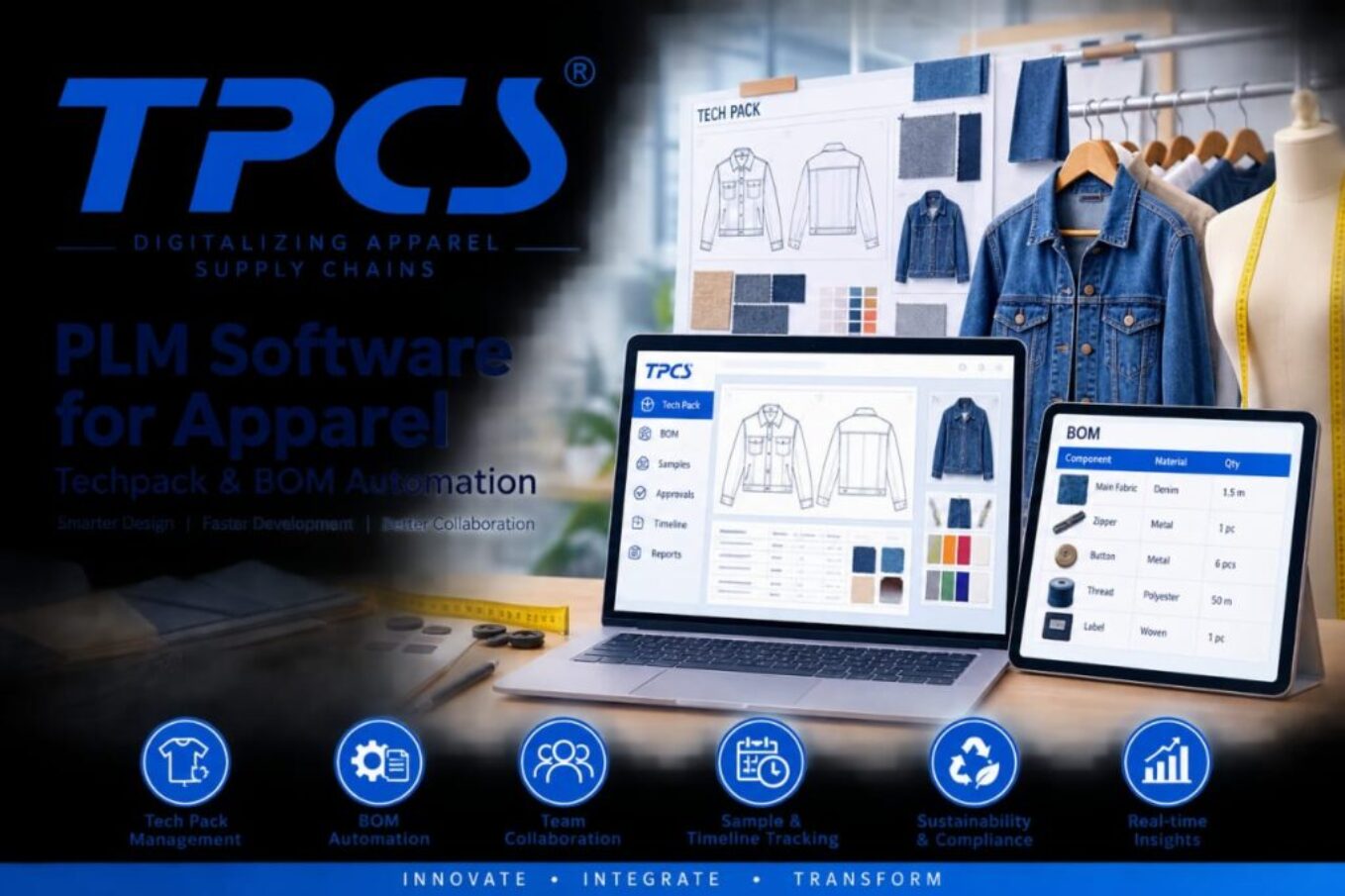
Manage Every Upper, Sole, and Last Digitally With Footwear PLM
Connect design, component costing, and sample approval into one workflow — built for the way footwear styles actually get made.
Trusted by Alpine Shoes, Tangerine Footwear, and other leading footwear manufacturers across India
What Is Apparel PLM Software?
Apparel PLM (Product Lifecycle Management) software is a digital system that manages a garment style from concept and techpack creation through sampling, costing, and bulk-production approval. TPCS PLM connects design, merchandising, and costing teams so every style change updates instantly across every department involved in that style.
When Spreadsheets and Email Can’t Keep Up With Style Development
Garment style development moves through dozens of hands — designer, merchandiser, sampling room, costing, and buyer — before a style is locked for bulk. Most factories still run this process on spreadsheets, WhatsApp, and email, and it shows up as missed dates and mismatched specs.
Techpack Version Chaos
Multiple techpack versions circulate by email, and sampling teams often work from an outdated spec without knowing it.
Disconnected Sample Tracking
Fit, size-set, and pre-production samples are logged in separate registers, so nobody has one view of a style’s approval status.
Manual BOM Creation Per Colorway
Teams rebuild the bill of materials from scratch for every colorway instead of deriving it from one base style.
Slow Buyer Approval Cycles
Buyer comments arrive by email and get manually copied into the next sample request, adding days to every round.
No Cost Visibility During Development
Costing happens after the fact, so a style can reach bulk approval before anyone notices the margin has slipped.
Lost Institutional Knowledge
When a merchandiser leaves, techpack history, revision notes, and buyer preferences often leave with them.
One Connected Workflow From Concept to Bulk Approval
TPCS PLM gives design, merchandising, and costing teams a single source of truth for every style — so a technical change made once updates the techpack, the BOM, and the cost sheet at the same time.
| Stat | What It Means | Why It Happens |
|---|---|---|
| 40% | Faster Sample-to-Approval Cycle | Digital techpack routing and auto-notifications cut the back-and-forth between merchandising, sampling, and buyers. |
| 35% | Fewer Techpack Revision Errors | Version-controlled specs mean sampling always works from the latest approved techpack. |
| 50% | Less Manual Follow-Up Time | Automated Time & Action (T&A) alerts replace manual status-chasing across departments. |
| 25% | Faster Costing Turnaround | BOMs auto-derive from the base style, so costing teams quote new colorways in minutes, not hours. |
| 100% | Audit Trail on Every Spec Change | Every techpack and BOM revision is logged with user, timestamp, and reason for change.
|
From export units to large domestic brands, garment factories across India run style development on TPCS PLM.
Every Style Development Function, In One Suite
Techpack & Spec Management
Build, revise, and route techpacks digitally — with zero version confusion.
- Create and revise techpacks digitally with full construction, measurement, and trim detail.
- Auto-lock approved versions so sampling teams can never work from an outdated spec.
- Attach reference images, stitch details, and buyer comments directly to the techpack.
- Track every revision with user, date, and reason for change.
Sample Lifecycle Tracking
See every sample — proto, fit, size-set, and pre-production — in one dashboard.
- Log and track every sample type from request through buyer comment to approval.
- Auto Time & Action (T&A) updates keep design, sampling, and merchandising in sync.
- Dashboards show samples by style, buyer, and pending action — nothing falls through.
- Full comment history against each sample round, visible to every stakeholder.
Smart BOM Automation
Generate the bill of materials for every colorway from one base style — automatically.
- Auto-build BOMs from techpack or costing data across the full color-size matrix.
- Eliminate manual BOM rebuilding for every new colorway or size break.
- Track BOM revisions with permissions and full change history.
- Link BOM data directly into procurement for accurate material planning.
Development Costing
See true style-wise cost and margin from the first sample round, not after bulk order confirmation.
- Generate detailed cost sheets tied directly to the BOM and techpack.
- Track cost variance and margin per style as specs and materials change.
- Compare costing across colorways and buyers instantly.
- Flag margin erosion before a style is locked for bulk production.
Buyer & Vendor Collaboration
Give buyers and fabric vendors direct visibility into approval status — no forwarded emails required.
- Share techpacks, sample images, and approval status through controlled access.
- Capture buyer comments directly against the relevant sample round.
- Vendor-wise fabric and trim development tracked against the same style record.
- Reduce approval delays caused by email threads and forwarded attachments.
Reports & Version Control
Get a single view of every style’s development status, cost, and history.
- Dashboards show styles by development stage, ex-factory date, and buyer.
- Full audit history of every techpack, BOM, and cost revision.
- Custom MIS reports for design, merchandising, and costing teams.
- Export style development data directly into your existing ERP or MES.
ROI / CTA Banner
Factories using TPCS PLM alongside SAP, legacy ERP, or standalone PLM tools save development time, sampling cost, and margin — from the first style.
Schedule a Free Demo
Frequently Asked Questions —
What is apparel PLM software and how is it diffTPCS Apparel PLM Softwareerent from apparel ERP?
Apparel PLM software manages a style’s development — techpacks, sampling, and BOMs — from concept to bulk approval. Apparel ERP manages what happens after: procurement, production, and finance. TPCS runs both on one platform, so development data flows straight into planning without re-entry.
Can TPCS PLM handle multiple colorways and size sets in one techpack?
Yes. TPCS builds one base techpack and BOM, then auto-generates colorway and size-set variations from it. You never need to recreate a separate BOM for every color, which is one of the most common causes of planning errors in manual systems.
Does TPCS PLM integrate with our existing ERP or SAP system?
Yes. TPCS PLM can run standalone or connect with SAP, Tally, and other ERP systems you already use, passing approved techpack, BOM, and costing data directly into procurement and production planning.
How long does implementation take for a mid-size garment factory?
Most garment factories go live on TPCS PLM within 4–6 weeks, covering techpack migration, BOM templates, and team training. Measurable gains in sample turnaround typically appear within the first full development cycle.
Can buyers and vendors access techpacks and sample status directly?
Yes. TPCS provides controlled, permission-based access so buyers can review techpacks and sample approval status, and fabric or trim vendors can see development requirements, without relying on forwarded emails.
Is TPCS PLM cloud-based?
Yes. TPCS is a SaaS cloud platform hosted on Microsoft Azure, so design, merchandising, and costing teams can access the same live data from the factory, a satellite office, or a buyer’s location.
Brand Conclusion
Style development breaks down when techpacks, samples, and costing live in separate tools that don’t talk to each other. TPCS PLM treats development as one continuous record — a techpack revision updates the BOM, and a BOM change updates the cost sheet, automatically. Factories that keep PLM disconnected from procurement and production end up re-entering the same style data three times before bulk order. Start by digitizing your techpack and BOM workflow first; costing accuracy and buyer approval speed follow directly from that foundation.