
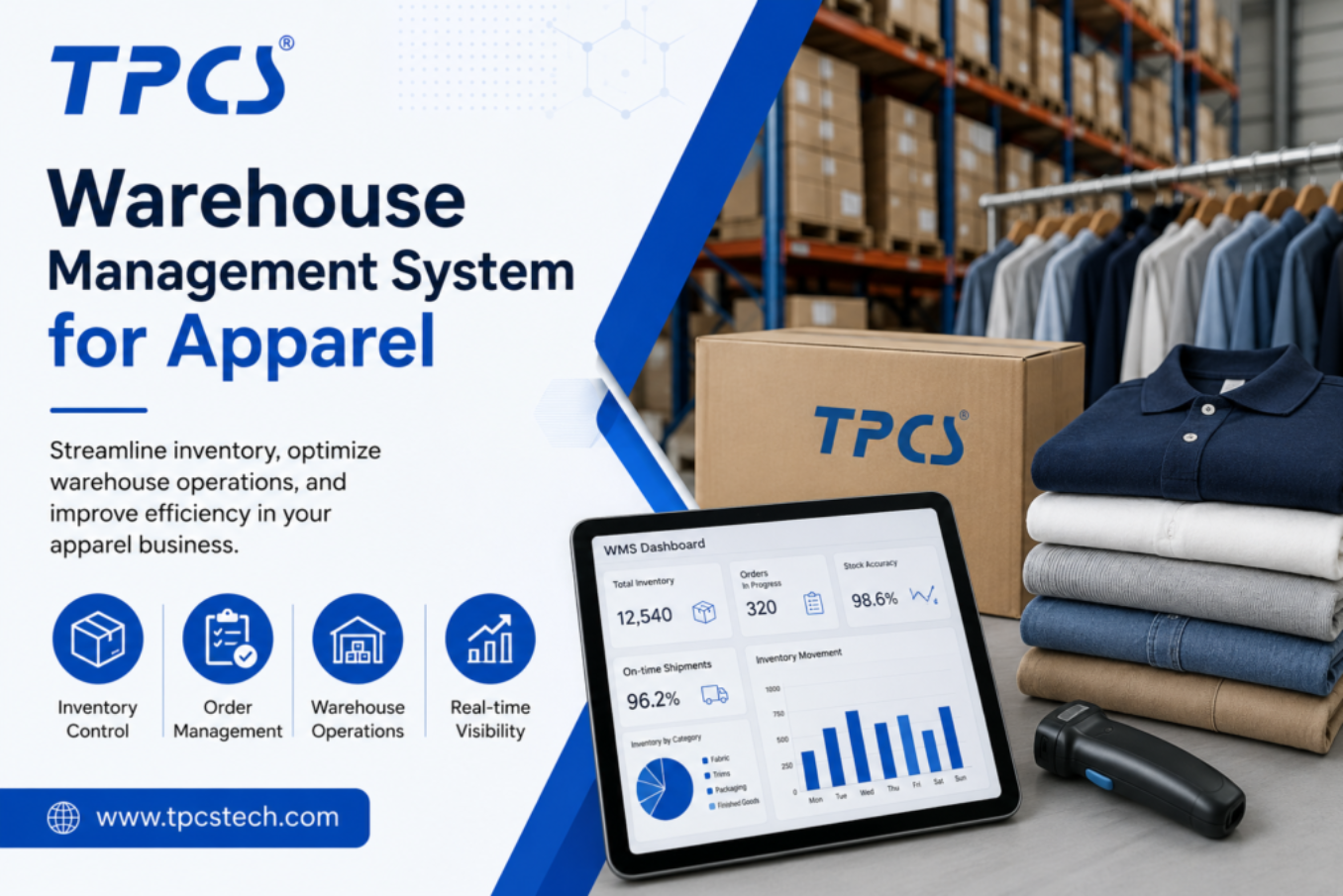
Know Exactly Where Every Roll, Trim, and Carton Is
A warehouse management system built for the color, size, and lot variability of apparel — not adapted from a generic retail WMS.
Managing multi-warehouse stock for garment factories and export units across India.
What Is a Warehouse Management System for Apparel?
A warehouse management system (WMS) for apparel manages fabric, trims, and finished goods across multiple locations using barcode tracking, reorder alerts, and quality inspection. TPCS WMS is built specifically for apparel’s color, size, shade, and lot variability, rather than adapted from generic retail warehouse software.
When Generic Warehouse Tools Can’t Handle Apparel’s Variability
A single fabric SKU in apparel can carry multiple shades, widths, and shrinkage values across different rolls and lots. Generic warehouse systems built for uniform SKUs lose accuracy the moment that variability enters the picture.
No Live Stock Visibility Across Warehouses
Stock counts differ between the physical floor and the register the moment a second location is added.
Manual Reorder Decisions
Purchase teams reorder by instinct or outdated stock sheets, causing both shortages and overstock.
Untracked Fabric Roll Shade & Lot Variance
Shade, width, and shrinkage differences between rolls of the same fabric go unrecorded, causing garment defects.
Manual GRN and QC Reconciliation
Goods receipt and quality inspection are matched by hand against purchase orders, delaying supplier payments.
Disconnected Inventory and Finance Data
Stock movement doesn’t automatically trigger the ledger entries needed for accurate cost and payables tracking.
Slow, Error-Prone Dispatch and Packing
Manual carton counting during packing increases the risk of shipment discrepancies.
One Live Stock Record Across Every Warehouse and Location
TPCS WMS gives apparel businesses real-time stock visibility down to the roll and lot level, with reorder alerts and quality checks built into the receiving process — not bolted on afterward.
| Stat | What It Means | Why It Happens |
|---|---|---|
| 100% | Real-Time Stock Visibility Across Locations | Every warehouse and store location shows live stock, updated with every transaction. |
| 10% | Reduction in Inventory Holding Cost | Accurate reorder logic frees up working capital tied up in excess stock. |
| 15% | Lower Material Wastage | Roll-level shade and lot tracking prevents mismatched fabric from reaching the cutting table. |
| 50% | Faster GRN-to-Payment Cycle | Purchase bill passing links directly to GRN and QC approval, verified before payment. |
| 20% | Faster Order Packing and Dispatch | Barcode scan-and-pack matches cartons against orders before they leave the warehouse. |
Garment factories and export units across India manage multi-location stock on TPCS WMS.
Every Warehouse Function, In One Suite
Multi-Warehouse Stock Control
See live stock across every warehouse, store, and satellite location from one dashboard.
- Track fabric, trims, and finished goods across unlimited warehouse locations.
- View consolidated or location-wise stock in real time.
- Transfer stock between locations with full digital movement records.
- Eliminate the gap between physical stock and register stock.
Barcode/RFID Material Tracking
Track every roll, trim, and carton with barcode or RFID precision.
- Issue, return, and transfer materials using barcode or RFID scans.
- Maintain a full digital trail from receipt through issue to consumption.
- Reduce manual entry errors in high-volume material movement.
- Support buyer traceability requirements with scan-level history.
Fabric Roll & Lot-Wise QC
Track shade, width, and shrinkage variance at the individual roll level.
- Record shade, width, and shrinkage data per fabric roll at receipt.
- Flag shade-band mismatches before rolls reach the cutting table.
- Perform AQL-based inspection and rejection tracking for buyer compliance.
- Maintain lot-wise traceability from raw material to finished garment.
Reorder & Shortage Alerts
Replace manual reorder guesswork with system-driven alerts.
- Set reorder points by material, location, and consumption pattern.
- Receive automatic alerts before stock reaches a critical shortage level.
- Auto Material Requirement Planning (MRP) identifies shortages ahead of production need.
- Reduce both emergency purchases and excess stock accumulation.
GRN-to-Finance Integration
Connect goods receipt, quality approval, and payment into one workflow.
- Link purchase bill passing directly to GRN and QC approval status.
- Auto-generate debit notes for rejections or shortages against the supplier.
- Ensure only verified quantities and rates are billed and paid.
- Maintain supplier-wise ledger and payment history in real time.
Scan-and-Pack Dispatch
Match finished goods against orders using barcode scans before shipment.
- Scan cartons using customer barcodes during the packing process.
- Auto-generate packing slips and dispatch reports without manual collation.
- Reconcile packed quantity against order quantity before dispatch.
- Reduce shipment discrepancies caused by manual carton counts.
ROI / CTA Banner
Apparel businesses running TPCS WMS alongside their existing ERP typically reduce holding costs and material wastage from the first full inventory cycle.
Frequently Asked Questions — TPCS Warehouse Management System for Apparel
What is a warehouse management system for apparel?
A warehouse management system for apparel tracks fabric, trims, and finished goods across one or more locations, with barcode-based movement tracking, reorder alerts, and quality inspection built for apparel’s shade, size, and lot variability.
How is this different from a generic WMS used in retail or logistics?
Generic WMS platforms assume uniform SKUs. TPCS WMS tracks shade, width, and shrinkage variance at the individual fabric roll level, and connects stock data directly to costing and production planning — not just storage location.
Can TPCS WMS manage multiple warehouses and store locations?
Yes. TPCS tracks stock across unlimited warehouse and store locations, with consolidated or location-wise views and full digital records of every inter-location transfer.
Does TPCS WMS integrate with our ERP and finance system?
Yes. TPCS WMS connects stock movement directly to procurement, costing, and finance, so GRN, QC approval, and purchase bill passing happen in one linked workflow rather than separate systems.
Does TPCS WMS support barcode or RFID tracking?
Yes. TPCS supports both barcode and RFID-based material tracking, depending on the scale and infrastructure of your warehouse operation.
How long does implementation take?
Most apparel businesses go live on TPCS WMS within 4–6 weeks, including warehouse mapping, barcode setup, and team training, with measurable stock accuracy gains within the first inventory cycle.
Brand Conclusion
Apparel inventory fails in warehouse systems built for uniform retail SKUs because a single fabric code can hide a dozen shade and lot variations that generic barcode tracking never captures. TPCS WMS tracks stock at the level apparel actually operates at — roll, lot, and shade — and connects that data straight into costing and finance instead of leaving it in an isolated inventory module. Start by digitizing fabric roll receipt and QC first; reorder accuracy and dispatch speed improve directly from that foundation.