
TL;DR:
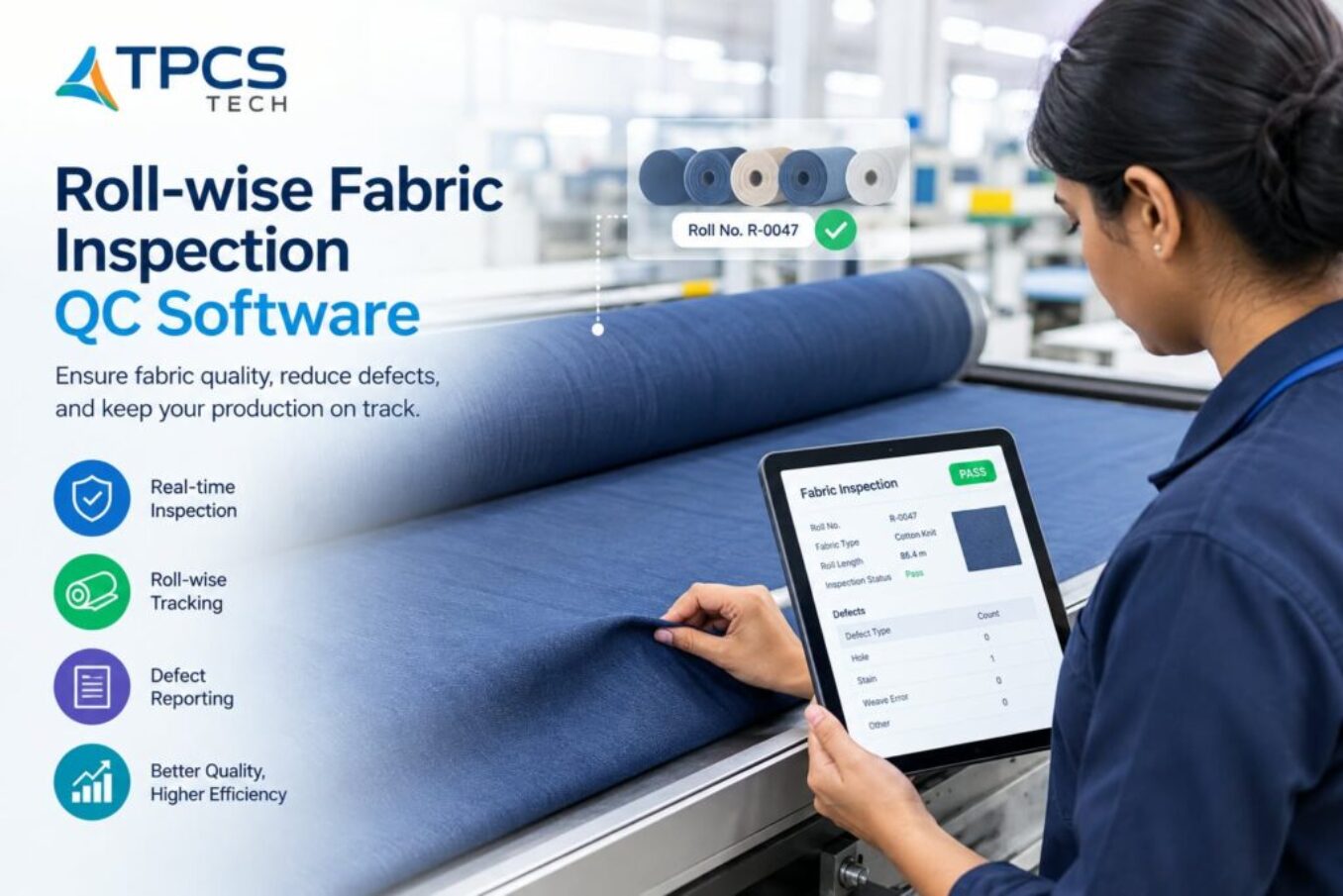
Roll-wise QC software records inspection results for every fabric roll, including 4-point defect scores, shade, width and GSM, against that roll’s ID. It stops defective rolls before cutting, groups rolls by shade, and gives you roll-level evidence when you claim against a mill or processor.
The cutting master at a woven unit lays 80 plies of shirting fabric for a big order. Halfway through cutting, an operator spots a run of slubs and a small hole pattern repeating across several layers.
Three rolls turn out to be the problem. But the fabric lot had passed inspection, because the inspection report covered the lot as a whole: a sample of rolls, an average score and a pass.
Nobody knows which three rolls they were. The roll stickers came off during spreading. The mill asks for roll numbers to process a claim. There are none to give.
What is roll-wise QC in textiles?
Definition: Roll-wise QC is fabric inspection in which each roll is checked and recorded separately against its own roll ID, covering defects, defect points, shade, width, GSM and length. Roll-wise QC software captures these results at the inspection machine and links them to stores, cutting and supplier records.
Lot-level inspection tells you whether a delivery is broadly acceptable. Roll-wise inspection tells you which specific rolls are good, which need to be held and which should go back.
The 4-point system, explained simply
Most garment exporters and many buyers use the 4-point system, standardised in ASTM D5430, to score fabric defects. Each defect gets penalty points based on its length.
| Defect size | Penalty points |
| Up to 3 inches | 1 point |
| Over 3 inches up to 6 inches | 2 points |
| Over 6 inches up to 9 inches | 3 points |
| Over 9 inches | 4 points |
| Holes and openings up to 1 inch | 2 points |
| Holes and openings over 1 inch | 4 points |
A single running yard can’t carry more than 4 points, however many defects it has.
How to calculate points per 100 square yards
Points per 100 square yards = (total points × 3,600) ÷ (yards inspected × fabric width in inches)
Example: a roll of 100 yards, 60 inches wide, with 18 total points.
18 × 3,600 = 64,800. 100 × 60 = 6,000. 64,800 ÷ 6,000 = 10.8 points per 100 square yards.
Many buyers accept up to 40 points per 100 square yards for a roll, but the acceptance limit is set by the buyer or your quality manual, so record it per buyer and fabric type.
Visual suggestion: Annotated example of an inspection sheet for one roll, showing defects marked along the length and the points calculation at the bottom.
More than defects: what a roll inspection should record
Defect points are only part of the picture. A good roll-level record also captures:
- Shade, checked centre to selvedge and against the approved standard, so rolls can be grouped before cutting.
- Actual width, because a roll narrower than ordered can wreck a marker plan.
- GSM or weight per unit area, especially for knits.
- Actual length against the length on the mill’s sticker.
- Bowing and skew on wovens, and spirality on knits.
- Shrinkage results, where a sample is tested.
Why roll-wise QC matters more than lot-level checks
Lot-level checks are faster, and in some cases they are enough. But roll-wise data pays for itself in three places.
At cutting. Rejected or held rolls never reach the spreading table. Shade groups go to separate lays, so you don’t get visibly different panels in one garment.
At claims. When a mill or processing house disputes a claim, roll numbers, defect maps and photos are hard to argue with. Without them, claims tend to get settled at a discount, or not at all.
At supplier review. Over a season, roll data shows which mills and processors deliver clean fabric and which don’t. That gives you a stronger hand at the next rate negotiation.
How roll-wise QC software works
Roll ID at receipt
When fabric arrives, each roll gets an ID, ideally a barcode or QR label, linked to the supplier, PO, lot and order. Our post on implementing RFID and barcode covers labelling options.
Defect entry at the inspection machine
The inspector scans the roll and records defects on a tablet or terminal as the fabric runs: type, size and position in yards. Points are calculated automatically, along with points per 100 square yards.
Shade, width and GSM in the same record
Shade group, actual width and GSM go against the same roll ID, so the record is complete in one place.
Automatic status
Based on the buyer’s limits, each roll is marked accepted, held for review or rejected. Stores can’t issue a held or rejected roll to cutting.
Reports that matter
Supplier-wise defect trends, top defect types, rolls on hold, and a shade group list for the cutting team.
Roll-wise QC and AQL: different checks, same goal
Fabric inspection checks the input. AQL inspection checks the finished garment before shipment. Both are needed, and they answer different questions.
If you’re setting up garment-stage inspection, read our post on AQL inspection and QC tracking software. For the role of quality inside production systems, see quality control with MES software.
Common mistakes in fabric inspection
- Inspecting a sample of rolls and applying the result to the whole lot, then cutting uninspected rolls.
- Recording defects on paper and typing them up later, by which point the roll stickers are gone.
- Using one acceptance limit for every buyer and fabric.
- Ignoring shade grouping, then finding panel-to-panel shade variation in finished garments.
- Not linking inspection to processing. If dyed fabric fails, the job worker who processed it should be visible in the same report. See tracking fabric processing.
What to look for in roll-wise QC software
- Barcode or QR roll IDs that follow the roll from receipt to cutting.
- Defect entry fast enough to keep up with the inspection machine.
- 4-point scoring with buyer-specific acceptance limits.
- Shade grouping that the cutting team can actually use.
- Hold and reject status that blocks issue to cutting.
- Supplier and processor scorecards built from roll data.
Frequently asked questions
What is roll-wise inspection in textiles?
It is inspection where each fabric roll is checked and recorded individually against its roll ID, covering defects, points, shade, width, GSM and length.
How is the 4-point system calculated?
Each defect gets 1 to 4 points based on its length. Points per 100 square yards equal total points × 3,600 divided by yards inspected × fabric width in inches.
What is the acceptable points limit in the 4-point system?
It depends on the buyer and fabric. Many buyers use 40 points per 100 square yards per roll, but always follow the limit in your buyer’s quality manual.
Is roll-wise QC different from AQL?
Yes. Roll-wise QC checks fabric before cutting. AQL is a sampling inspection of finished garments before shipment.
Why do fabric rolls need shade grouping?
Rolls from the same lot can still vary in shade. Grouping them and cutting each group separately prevents different shades ending up in the same garment.