
Why Leather ERP Software Is Different from Generic ERP Systems
Leather ERP software helps tanneries and leather manufacturers manage specialized production workflows, material traceability, quality control, inventory, and business operations in one organized system. Unlike generic ERP platforms, a specialized solution can be designed around the unique requirements of leather processing and manufacturing.
Leather manufacturing has operational requirements that can differ significantly from conventional manufacturing. Raw hides and skins pass through processing stages that can affect yield, quality, grade, and final value. Tannery operations therefore need workflows that reflect material transformation and quality variation.
A generic ERP may handle finance, purchasing, sales, and inventory but may require extensive customization for tannery-specific processes. Fashion ERP platforms may manage styles and collections effectively but may not provide sufficient depth for hide processing and traceability.
Leather ERP software should be evaluated on how well it supports the complete manufacturing lifecycle rather than only on standard accounting or inventory features.
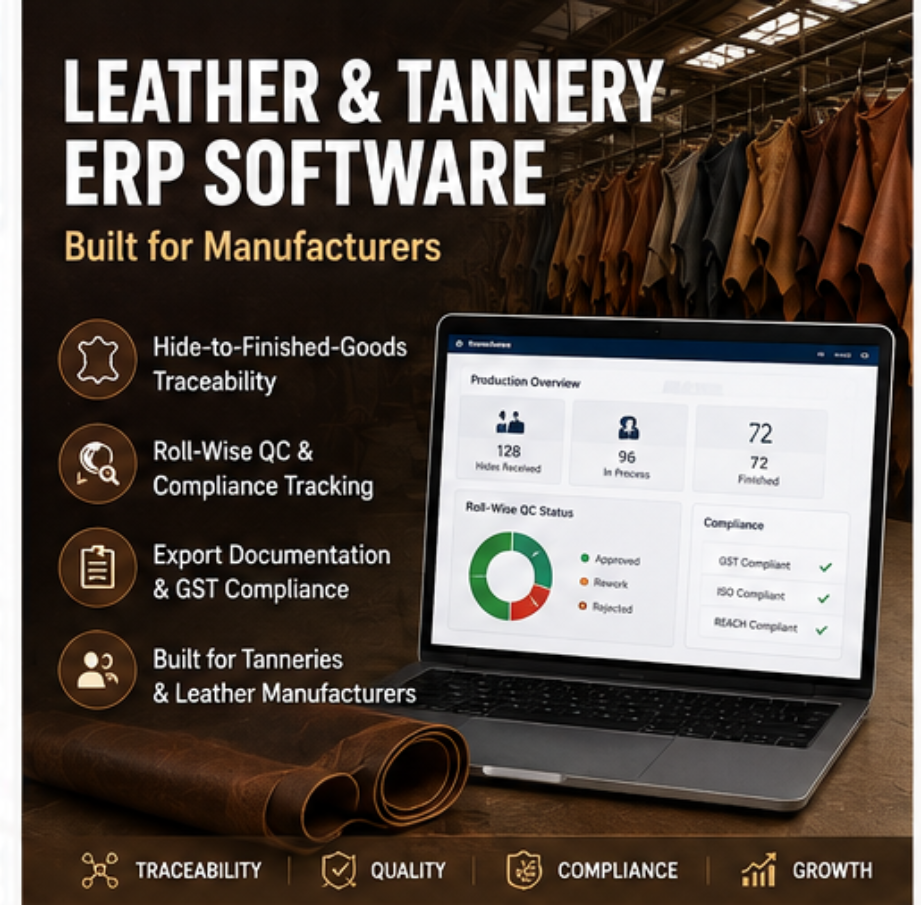
Hide-to-Finished-Goods Traceability
Traceability allows a business to understand how raw materials move through production and how they become finished products. In a tannery, information may need to be associated with incoming hides, batches, processing stages, quality classifications, and finished leather.
A centralized system can make this information easier to track and retrieve. Better traceability can support production analysis, quality investigations, inventory control, and customer documentation.
Roll-Wise QC & Compliance Tracking
Quality is a major consideration in leather production. Inspection may involve defects, grading, dimensions, appearance, and other characteristics. Keeping inspection information connected to material and production records can improve visibility.
Digital QC records can also reduce reliance on paper-based logs and disconnected spreadsheets. Managers can review historical records, identify recurring quality issues, and support more consistent inspection processes.
Export Documentation & GST Compliance
Leather businesses involved in domestic and international trade may manage orders, shipments, invoices, tax information, customer records, and export documentation. Centralizing operational data can reduce repeated data entry and improve access to relevant information.
Indian manufacturers should evaluate how an ERP supports their GST, accounting, invoicing, and export-related workflows and confirm compliance requirements with qualified financial or tax professionals.
Who This Is Built For
Specialized leather ERP software can be relevant to tanneries, leather manufacturers, leather goods manufacturers, footwear businesses, exporters, and organizations managing multiple stages of leather production.
The ideal system depends on the business model. A tannery may prioritize hide processing and yield, while a leather goods manufacturer may need stronger product, BOM, production, and finished-goods management.
FAQs
What is leather ERP software?
Leather ERP software is an enterprise platform designed to support business and manufacturing processes for leather-related organizations.
Why do tanneries need specialized ERP workflows?
Tanneries manage material transformation, quality variation, traceability, and production processes that may not be fully represented by generic ERP workflows.
Can leather ERP support export businesses?
Depending on its capabilities, an ERP can centralize order, inventory, production, customer, supplier, accounting, and documentation information.