
Why shoe factory stores are harder to run
A footwear store holds a mix of materials that behave very differently:
| Material type | Unit | What makes it tricky |
|---|---|---|
| Leather and synthetics | Square feet or metres | Varies by lot, shade, grade and thickness; area is measured, not counted |
| Soles, insoles, heels | Pairs by size | One style can need 8 to 15 size codes, each with its own stock |
| Toe puffs, counters, shanks | Pairs by size or size band | Easy to mix up across close sizes |
| Trims (buckles, eyelets, laces) | Pieces, pairs or gross | Small, high-count items that walk away easily |
| Adhesives, primers, finishes | Kilograms or litres | Batch, shelf life and safety storage |
| Packing materials | Pieces | Buyer-specific artwork and barcodes |
| Finished goods | Pairs by style, color and size | Pair matching and carton assortments |
A store that tracks only "TPR sole, black: 12,000 pairs" cannot tell the planner whether lasting can start on size 44 tomorrow.
The six building blocks of good footwear inventory control
1. A clean item master
Every material needs one code with its attributes: size, color, thickness, grade, supplier. Duplicate codes for the same sole or leather are the root of most stock mismatches.
2. Lot and shade tracking for leather
Record each lot's area, shade group, grade and thickness at receipt. Issue leather to cutting by lot so that a pair is never cut from two different shades. This is also the basis for traceability when a buyer asks where a batch came from.
3. Size-wise stock for bottoms and components
Soles, insoles and components must be stored, counted and reserved by size. Physical bin locations by size make counts faster and errors rarer.
4. Barcode or RFID issue, return and transfer
Scanning at issue and return replaces handwritten slips. It records who took what, for which order, and what came back.
5. Reservation against orders
Once MRP allocates soles to an order, other orders should not be able to consume them. Without reservation, the first line to ask gets the stock, and the order with the earliest ship date may be left short.
6. Reorder levels for common items
Adhesives, threads, common laces and packing materials suit reorder levels better than order-by-order buying. Set minimum and maximum levels from actual consumption.
Inbound quality: catching problems at the gate
Problems that get past receiving end up on the line. A simple inbound check should cover:
Leather: area measurement against the invoice, shade grouping, defects, thickness.
Soles: size marking, color, hardness or finish defects, quantity per size.
Components: size accuracy and count.
Adhesives: batch number and expiry date.
Record rejections against the supplier and raise a debit note at once. Inbound AQL sampling (for example under ISO 2859-1) gives a consistent method for bulk deliveries.
Dead stock: the silent cost in footwear stores
Order cuts and size changes leave soles and components in odd sizes and colors. Over a few seasons, this dead stock ties up cash and floor space. To control it:
1. Review stock with no movement for 90 or 180 days every month.
2. Check whether it can be used in current or upcoming styles before anyone buys new.
3. Return to vendor where agreements allow.
4. Write off or sell what cannot be used, and record why, so planning learns from it.
A worked example: what stock visibility is worth
Say a factory holds ₹2 crore of raw materials on average. TPCS publishes a figure of about 10% reduced inventory holding for footwear customers using live stock visibility and reorder logic. On these numbers, that would release about ₹20 lakh of working capital. Use your own inventory value, and treat the 10% as the vendor's claim to be tested, not a guarantee.
How TPCS footwear ERP handles inventory
The inventory module in TPCS footwear inventory software covers:
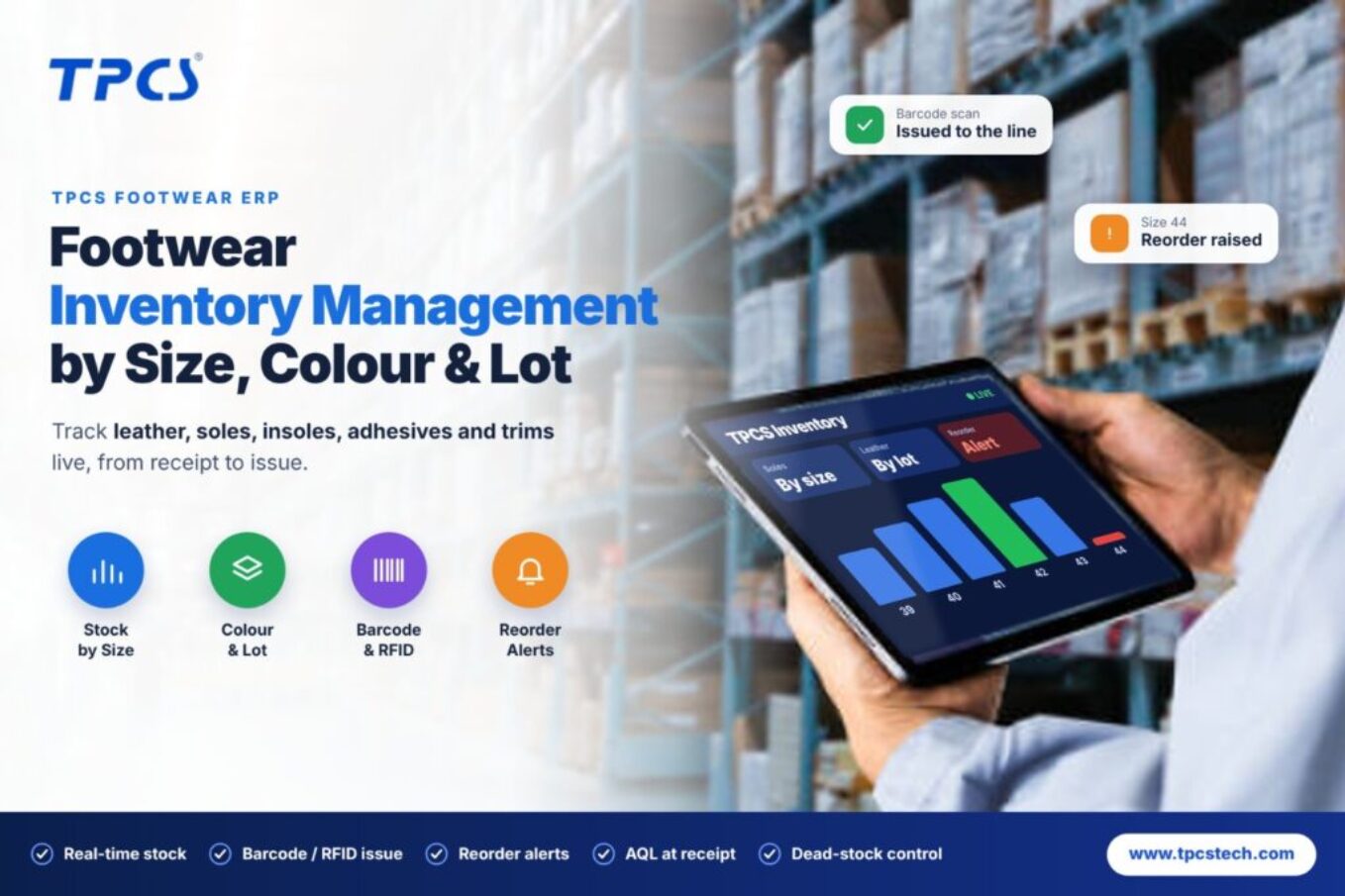
Real-time tracking of leather, soles, insoles, adhesives and trims across locations.
Barcode or RFID-based issue, return and transfer.
Automatic reorder and shortage alerts.
AQL inspection and rejection tracking at receipt.
Because inventory shares one database with MRP, costing and production, every issue and receipt updates order costs and requirements at the same time.
Frequently asked questions
How should a shoe factory track sole inventory?
By style, color and size, with separate stock and bin locations for each size and reservations against each order.
How is leather inventory measured?
In square feet (common in India and the US) or square metres, by lot, with shade, grade and thickness recorded at receipt.
What causes dead stock in footwear factories?
Mostly order cuts, size-ratio changes and cancelled colorways that leave soles and components in sizes or colors nobody needs.
Is barcode or RFID better for footwear stores?
Barcodes are cheaper and enough for most material movements. RFID helps where you track high volumes of components or need hands-free scanning.
How does inventory link to costing?
Every issue against an order adds actual material cost to that order, so the live cost sheet reflects what was really consumed.
See your store by size, lot and location
Book a TPCS footwear ERP demo to see leather lots, size-wise sole stock and order reservations in one view.
Sources
TPCS Footwear ERP product page (inventory module, 10% inventory holding claim): tpcstech.com/footwear-erp, checked November 2026
ISO 2859-1, Sampling procedures for inspection by attributes (International Organization for Standardization)