
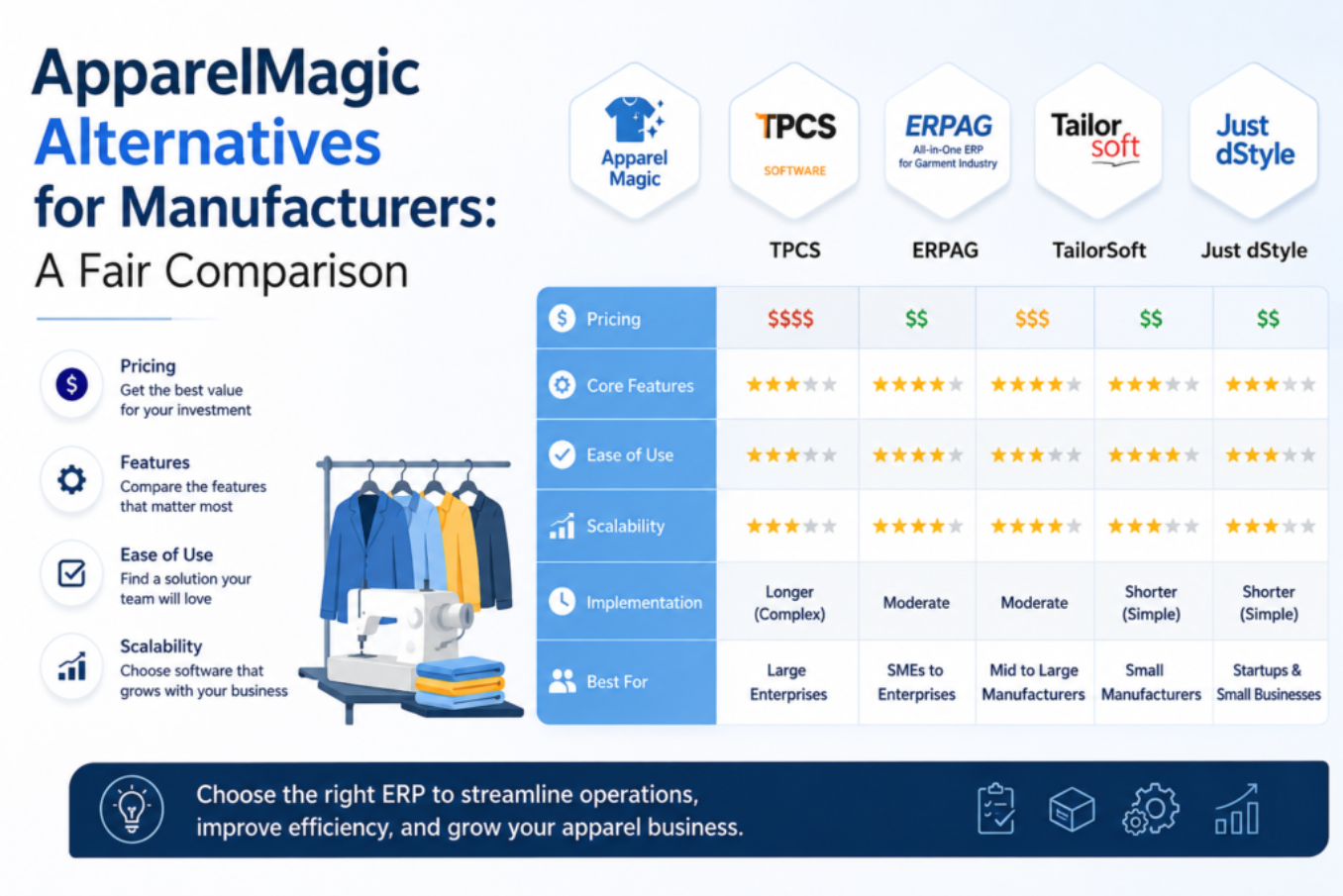
ApparelMagic alternatives can be worth considering when manufacturers need software that better matches their production, costing, inventory, quality, and factory management workflows. While apparel management platforms can support product and business operations, manufacturing businesses may have more specialized requirements. Comparing ApparelMagic alternatives helps manufacturers evaluate different platforms based on their actual operational needs, budget, scalability, integrations, and long-term business goals.
ApparelMagic Alternatives: Where ApparelMagic Excels
Apparel management platforms can be valuable for brands that need product development, merchandising, collections, sales, and retail-oriented workflows. These capabilities can support teams that manage a large product portfolio and multiple market channels.
However, the importance of each feature depends on the business model. A brand may prioritize product and merchandising visibility, while a factory may prioritize production and operational control.
Where Manufacturer-First Platforms Differ
Manufacturers typically need deeper operational support for production planning, BOMs, costing, material procurement, inventory, quality, job work, and factory reporting. These processes directly affect production efficiency and delivery performance.
A manufacturer-first platform is generally evaluated on how well it connects planning, materials, production, quality, and finished goods. Businesses considering alternatives should identify their most critical workflows before comparing platforms.
Feature-by-Feature Comparison Table
When evaluating ApparelMagic alternatives, compare the features that directly affect operations.
Costing: Can the platform support product and production costing?
BOM: Can teams manage materials and components by style or product?
Production: Can the system support planning and production tracking?
Inventory: Can teams track materials and finished goods?
Quality: Can inspection and QC information be managed digitally?
Supplier Management: Can supplier information and purchasing workflows be organized?
Reporting: Are operational and management reports available?
Integration: Can the platform connect with ERP, accounting, e-commerce, or other systems?
The exact feature set should be confirmed with each vendor.
Pricing & Deployment Differences
Software pricing can depend on users, modules, implementation, integrations, hosting, support, and customization. A lower subscription price may not represent a lower total cost if implementation or integration requirements are significant.
Businesses should request current quotations and ask for a clear breakdown of one-time and recurring costs. They should also evaluate deployment time, training, data migration, and ongoing support.
Which Type of Business Should Choose Which
A fashion brand may prioritize merchandising, product development, collections, and retail workflows. A manufacturing business may prioritize production, costing, inventory, quality, procurement, and supplier management.
Organizations with both brand and manufacturing operations should assess whether one platform can support the complete workflow or whether integrations between specialized systems are required.
FAQs
What should I look for in ApparelMagic alternatives?
Start with your business requirements, then compare manufacturing functionality, costing, production, inventory, quality, integrations, scalability, implementation, and total cost.
Are all apparel ERP platforms the same?
No. Platforms differ in their focus, workflows, integrations, and depth of manufacturing or brand functionality.
Should manufacturers choose a manufacturer-focused ERP?
Businesses with complex factory operations should evaluate whether a manufacturer-focused platform better matches their production workflows.