
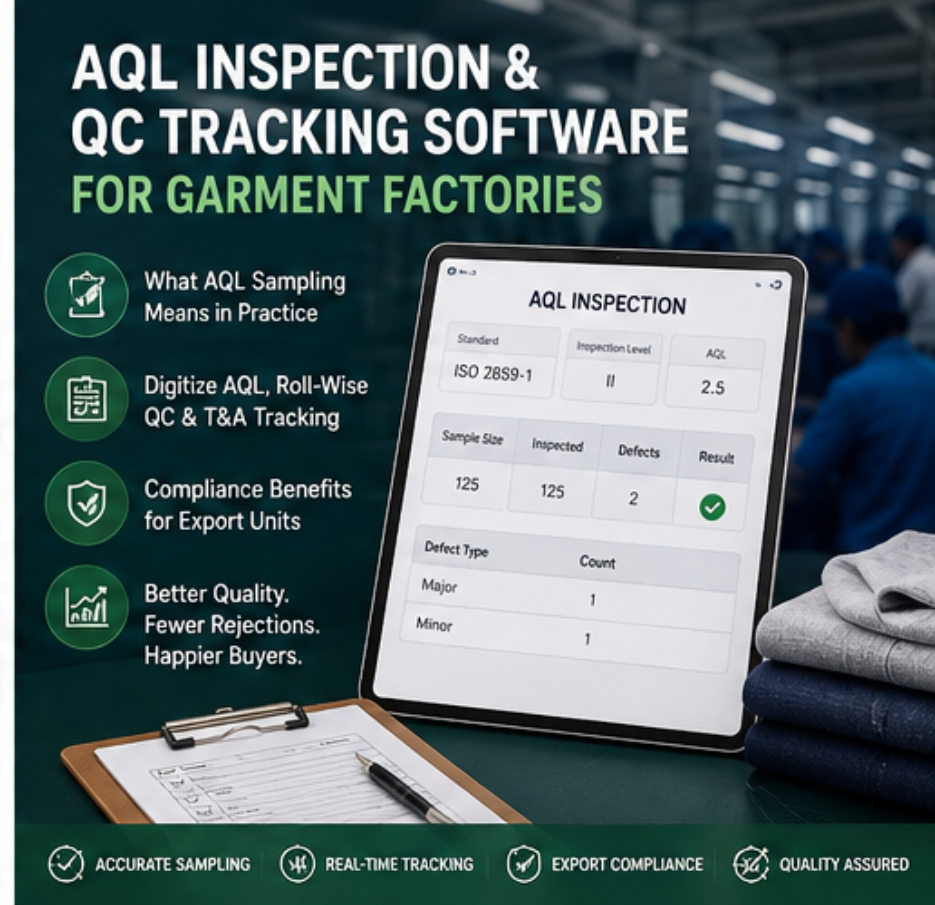
AQL inspection software helps garment factories streamline quality inspections, track defects, and maintain consistent quality standards throughout the production process. With centralized QC tracking, teams can monitor inspection results and identify quality issues faster.
How AQL Sampling Works in AQL Inspection Software
AQL, or Acceptable Quality Limit, is commonly used as a sampling approach in quality inspection. Instead of checking every unit in a lot, an inspection plan defines a sample and acceptance criteria. The exact sampling procedure should follow the applicable standard, buyer requirements, and the factory’s quality procedures.
AQL inspection software can help quality teams organize inspection information, record findings, and maintain a digital history of inspections. The software should support the process rather than replace established quality standards.
Where Manual QC Logs Break Down at Scale
Paper logs and spreadsheets can become difficult to manage when factories handle many orders, styles, production lines, buyers, and inspection stages. Records may be spread across departments, making it harder to retrieve historical information or identify recurring defects.
Manual data entry can also introduce inconsistencies. A centralized digital workflow can improve record accessibility and make it easier for managers to review quality information.
Digitizing AQL, Roll-Wise QC & T&A Tracking
Digital quality workflows can capture inspection results, defect categories, quantities, comments, and corrective actions. When connected to material information, roll-wise tracking can help teams associate fabric or material records with inspection activity.
T&A, or Time and Action, tracking can support production milestone management. Teams can monitor planned and actual dates for important activities and identify potential delays earlier.
Jobwork tracking can also help manufacturers monitor material movement and external processing activities where applicable.
Compliance Benefits for Export Units
Export manufacturers often need consistent quality procedures and reliable records. Centralized inspection information can make it easier to review inspection history, analyze defect trends, and provide supporting documentation when required.
Digital records can also support internal audits and management reviews. However, software should be configured according to the factory’s quality system and customer requirements.
FAQs
What is AQL inspection software?
AQL inspection software helps garment factories manage inspection plans, results, defect information, and quality reporting through a digital workflow.
Why should garment factories digitize QC?
Digital QC can reduce paperwork, improve traceability, make records easier to retrieve, and support faster analysis of quality issues.
What is roll-wise QC tracking?
Roll-wise QC tracking associates fabric or material roll information with quality inspection records to improve traceability.
What is T&A tracking in apparel manufacturing?
T&A tracking monitors important production activities, milestones, and planned versus actual dates.
Can QC software support export factories?
It can help organize quality records and reporting, but the system should be configured to meet the factory’s applicable customer, standard, and compliance requirements.