
How We Evaluated the Best Apparel ERP for Manufacturers
Selecting the best apparel ERP requires a business-specific evaluation. Manufacturers should look beyond marketing claims and examine how each platform supports actual day-to-day operations.
Key evaluation areas include product and style management, BOMs, costing, material planning, purchasing, production planning, inventory, quality, supplier management, reporting, integrations, security, scalability, implementation, training, and support.
The right ERP may differ for a small factory, a multi-location manufacturer, an exporter, or a vertically integrated fashion business.
When selecting ERP software, manufacturers should compare production planning, costing, BOM management, inventory, quality, supplier management, reporting, integrations, scalability, implementation, and support. The best apparel ERP for manufacturers should match the company’s specific workflows, production requirements, budget, and future growth plans.
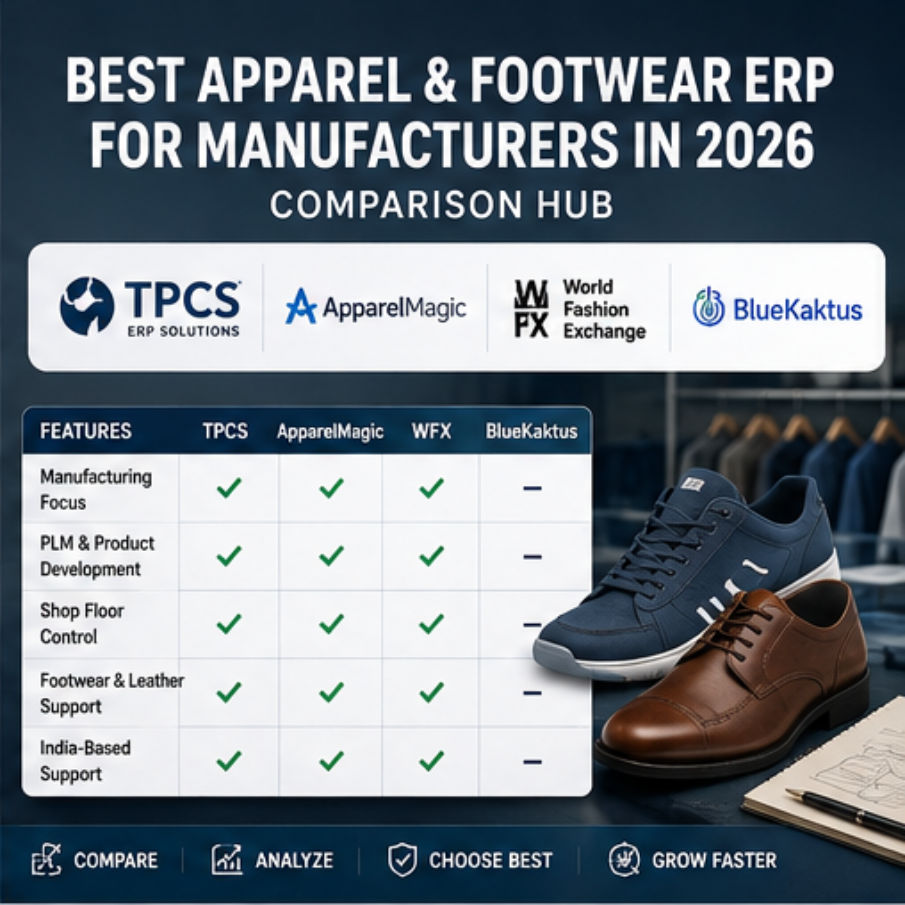
Comparison Table: TPCS vs ApparelMagic vs WFX vs BlueKaktus
TPCS: A manufacturing-oriented platform with apparel and related manufacturing workflows.
ApparelMagic: An apparel-focused business platform covering product and operational workflows.
WFX: A fashion and apparel management platform serving brands and manufacturers.
BlueKaktus: An enterprise software platform focused on apparel and fashion operations.
This high-level comparison is intended as a starting point. Buyers should verify current product features, integrations, pricing, deployment options, implementation scope, and support directly with each provider.
Best for Manufacturers vs Best for Brands
Manufacturers generally require strong support for production planning, BOM management, costing, material procurement, inventory, quality, job work, and factory reporting. Brands may prioritize product development, merchandising, collections, sales, retail, and customer-facing processes.
A platform that is excellent for a brand may not be the best operational fit for a factory. Buyers should map their most important workflows before selecting software.
Best for Footwear & Leather
Footwear and leather businesses have additional considerations around materials, variants, size and color combinations, costing, production, quality, and traceability. Software should be evaluated for its ability to handle the specific operational model of the business.
A manufacturer should also consider whether the platform can connect product information with procurement, production, inventory, quality, and financial processes.
Best for India-Based Factories
Indian factories may need support for GST-related processes, local supplier workflows, accounting integrations, inventory, production, purchasing, and statutory documentation. These requirements should be included in the software evaluation rather than treated as an afterthought.
Implementation, training, data migration, and local support can also affect the overall value of an ERP.
Frequently Asked Questions
What should manufacturers compare when choosing apparel ERP software?
Compare manufacturing functionality, costing, production, inventory, quality, supplier management, reporting, integrations, scalability, implementation, and support.
Is the most expensive apparel ERP always the best?
No. The best platform is the one that fits the company’s processes, budget, scale, and future requirements.
What is the difference between apparel ERP and PLM?
ERP manages broader business and operational processes, while PLM focuses more heavily on product development and lifecycle management. Some platforms provide capabilities that overlap.